Why Site Teams Still Depend on Cash for Business Expenses
Site teams work away from office infrastructure. They purchase materials, pay for transport, and handle petty expenses at locations where traditional employee expense management systems don't reach.
Construction supervisors buy cement from local suppliers. Manufacturing maintenance staff source spare parts from neighbourhood hardware shops. Logistics drivers pay tolls and handle loading charges. Field engineers cover meals, mobile recharges, and emergency repairs.
These petty expenses happen immediately. Waiting for approvals or bank transfers delays work and triggers project penalties. Traditional expense management systems were designed for office environments with predictable spending patterns and formal vendors.
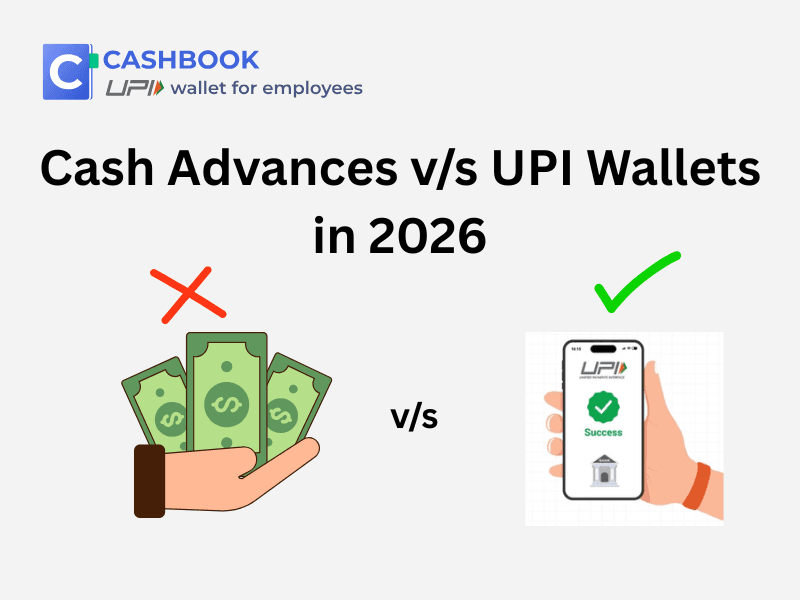
Most companies hand out cash advances between ₹30,000-50,000 per site supervisor. Or they ask employees to pay from personal funds and file reimbursement claims later. Both methods create serious problems for employee expense management and company financial control.
Cash advances eliminate visibility. Finance teams discover where money went only when expense reports arrive weeks later. Employee reimbursements create financial stress. Workers fund business expenses from personal accounts and wait weeks for payback. Industry data shows 25-30% of field expenses leak through inflated bills, duplicate claims, and unverified spending.
Where Site Team Petty Expenses Actually Happen
Understanding where site teams spend reveals why traditional petty cash management fails and why UPI expense management works.
Local hardware shops near construction sites stock cement, steel, electrical fittings, and plumbing materials. Most operate without card-accepting POS terminals. Small paint dealers, tool vendors, and timber suppliers follow the same pattern. These aren't businesses waiting to modernize. They're part of India's 709 million QR code payment network.
Transportation expenses go to auto drivers, tempo operators, and two-wheeler rentals. Food spending flows to street vendors, roadside dhabas, and tea stalls. Site teams need xerox shops for drawings, courier services for urgent dispatch, and mobile recharge for communication.
NPCI data shows over 8 crore merchants and 80 crore individuals now use UPI for transactions. This coverage is 90 times larger than card acceptance infrastructure, which remains limited to 7.8 million POS terminals. For employee expense management in field operations, this infrastructure gap matters fundamentally.
The question for petty cash management isn't whether vendors accept digital payments. It's which digital payment method works at the locations where your teams actually spend.
Why Small Merchants Refuse Corporate Cards
Small merchants make rational economic decisions about payment methods based on profit margins and working capital needs.
Hardware vendors work with 10-15% margins. Kirana shops operate at 8-12% margins. Electrical stores see 12-18% margins on most products. Corporate cards charge 1.5-2% MDR (Merchant Discount Rate) on every transaction.
When a site supervisor pays ₹5,000 for materials using a corporate card, the merchant loses ₹75-100 to card processing fees. On a sale with ₹400-500 gross margin, losing ₹100 means 20-25% of profit disappears. This makes cards economically unviable for thin-margin businesses.
Card payments also settle in 2-4 business days. Small shops need immediate funds to restock inventory. POS terminals cost ₹500-1,500 monthly in rental fees and require stable internet connectivity. A neighbourhood shop can't justify these costs for occasional corporate transactions.
UPI changed this calculation. Merchants pay zero fees on UPI transactions. Payments settle in 2-3 seconds. Generating a QR code costs nothing. Any smartphone worth ₹5,000 can accept UPI payments.
This explains why UPI expense management works for field operations where corporate cards fail. The payment method aligns with how small merchants actually operate.
Payment Method | Merchant Coverage in India | Cost to Merchant | Settlement Speed | Infrastructure Required |
|---|---|---|---|---|
Corporate Cards | 7.8 million POS locations | 1.5-2% per transaction | 2-4 business days | POS terminal, internet, monthly rental |
UPI Wallets | 55 million QR codes + 300 million accounts | Zero fees | 2-3 seconds | Smartphone only |
Cash | Universal | Zero | Immediate | None |
Problems with Corporate Cards for Employee Expense Management
Corporate cards face three fundamental problems in field operations: slow deployment, inflexible controls, and delayed visibility. Each creates friction that undermines effective employee expense management.
Physical cards take 7-15 days from approval to delivery. Virtual cards only work at online merchants, not local shops. For businesses that mobilize site teams on short notice, this timeline makes cards unusable for immediate petty expense needs.
Cards embed spending limits in plastic. Changing limits requires bank forms and approvals. A site supervisor needing ₹50,000 this month but ₹10,000 next month can't adjust limits dynamically. Companies either issue high-limit cards (fraud risk) or low-limit cards (constant hassle).
Transaction data from cards arrives 24-48 hours late. Finance teams discover spending problems only after money is gone. There's no real-time visibility to intervene when projects approach budget limits or employees make unusual purchases.
Bill attachment happens separately from payment. Employees swipe cards at vendors, then upload receipts days later through expense software. By that time, thermal receipts have faded and details are forgotten. Finance teams spend 15-20 days monthly reconciling mismatched transactions.
How Indian Expense Management Platforms Address These Problems
Multiple platforms offer employee expense management and petty cash management solutions. Understanding what they actually provide reveals significant gaps for field operations.
Volopay: Card-First Expense Management Platform
Volopay combines corporate cards with UPI payouts and multi-currency wallets. The core architecture is card-first. UPI exists as an add-on feature.
Site teams still face the 7.8 million POS terminal limitation. Virtual cards need 3-5 days for deployment. Pricing uses custom enterprise quotes. Multi-currency support adds cost complexity for purely domestic operations.
For employee expense management in Indian field operations, the card-first approach limits where teams can actually spend.
Zoho Expense: Tracking Without Payment Capability
Zoho Expense provides expense tracking starting at ₹330 per user per month. Integration with Zoho Books is strong. The platform excels at expense report automation and approval workflows.
The core limitation: Zoho Expense provides no payment method. It's tracking-only software. Employees still pay from personal funds and file reimbursement claims. All the financial stress and delayed payback problems remain.
For a 50-employee field team, monthly costs of ₹330-580 per user total ₹1.98-3.48 lakh annually. Companies need a separate payment solution on top of this tracking software. This doesn't solve the petty cash management problem. It only tracks it after the fact.
Happay: Enterprise Expense Management System
Happay targets organizations with 500+ employees. Implementation takes months to configure hierarchies, approval matrices, and policy rules.
The system is card-dependent, facing the same 7.8 million POS acceptance limitation. Pricing uses opaque enterprise quotes. For mid-market companies with 50-200 field staff, the system is over-engineered and expensive for basic petty expense needs.
How CashBook's UPI Expense Management Differs
We built CashBook specifically for UPI expense management in Indian field operations. The platform provides payment capability and tracking in one system. Our UPI wallets work at 55 million merchant QRs plus 300 million personal UPI accounts. This is the actual coverage site teams need for petty cash management. Wallets activate in under 2 hours, not days.
Employees pay via UPI at any merchant. Our app prompts for bill upload immediately. The system auto-matches bills to transactions and flags discrepancies. Managers approve with one tap. Approved expenses sync automatically to Tally or Zoho Books.
This workflow integrates payment and documentation at the point of spending. It solves both the payment problem and the reconciliation problem that plague traditional employee expense management.
Platform | Payment Method | Merchant Coverage | Deployment Time | Pricing Model | Best For |
|---|---|---|---|---|---|
CashBook | UPI wallets | 55M UPI QRs + 300M bank accounts | Under 2 hours | 1.5% per transaction (₹99 minimum) | Field operations, petty expenses |
Volopay | Cards + UPI payouts | ~7.8M POS terminals (card-dependent) | 3–5 days | Custom enterprise pricing | Global and cross-border operations |
Zoho Expense | Expense tracking only (no payments) | Not applicable | Same day | ₹330–₹580 per user per month | Office reimbursements and claims |
Happay | Corporate cards | ~7.8M POS terminals | Several weeks | Custom enterprise pricing | Large enterprises (500+ employees) |
Why UPI Wallets Work Better Than Cash
Cash creates three problems for employee expense management: zero visibility, significant leakage, and compliance gaps. UPI wallets solve all three while maintaining payment universality.
Real-Time Visibility vs. Delayed Discovery
Cash advances create visibility blackholes. Finance hands out ₹50,000 and discovers where it went 2-3 weeks later when expense reports arrive.
UPI wallets provide transaction-level visibility within seconds. Every payment creates a digital record with exact amount, timestamp, vendor UPI ID, and GPS location. Finance teams see spending as it happens, not weeks later.
This enables proactive management instead of reactive cleanup. Finance can intervene when projects approach budget limits. Suspicious patterns get investigated immediately while context is fresh, not weeks later when proving anything becomes difficult.
Automatic Leakage Prevention
Companies switching from cash advances to UPI wallets report 30% reduction in unexplained expenses. This doesn't come from policy changes. It comes from system architecture that makes leakage difficult.
Cash advances leak through rounded-up expenses. Site supervisors claim ₹500 for a ₹450 purchase. Small amounts disappear into "miscellaneous" categories. Employees submit duplicate invoices across different reports. Vendors provide inflated bills and split the difference with employees.
UPI wallets create immutable payment records with exact amounts. Employees can't round up because the system knows precisely what was paid. Duplicate invoice detection flags repeated vendor-amount combinations. Bill photo requirements make inflated invoices visible during approval. Dashboard analytics highlight unusual patterns automatically.
For a mid-sized company with field teams spending ₹10 lakh monthly, reducing leakage from 30% to 5% saves ₹2.5 lakh monthly. That's ₹30 lakh recovered annually. Check out how much you can be saving with the help of UPI wallets →
Complete Documentation at Payment Time
Traditional expense management separates payment from documentation. Employees pay, then upload receipts days or weeks later through expense software.
By that time, thermal receipts have faded. Employees can't remember what charges were for. Finance teams spend 15-20 days monthly chasing missing receipts and reconciling mismatched amounts.
UPI wallets force documentation at payment time. After completing a UPI payment, the app prompts for bill upload before allowing the next transaction. Employees photograph receipts while still at the vendor location. The system matches bill amounts to transaction amounts and flags discrepancies immediately.
Problem with Cash | How UPI Expense Management Solves It | Operational Impact |
|---|---|---|
Zero visibility until expense reports arrive | Real-time transaction feed with GPS location | Finance sees spending as it happens, can intervene immediately |
25-30% leakage through rounded bills and fraud | Exact amount records, duplicate detection, pattern analytics | Evident drop in petty cash leakage |
Receipts lost, faded, or submitted weeks late | Bill photo mandatory at payment time | Month-end closing takes 1-2 days instead of 15-20 days |
No control over spending once cash is handed out | Programmable limits by day, transaction | Can freeze wallets instantly, adjust limits in real-time |
How UPI Expense Management Works in Real Operations
Real examples show why UPI wallets solve petty cash problems that traditional systems can't.
Manufacturing: Production and Team Operations
Maintenance teams need immediate funds when equipment fails. Before, getting cash advances took 2-4 hours while production stopped. With CashBook wallets, maintenance engineers have pre-approved spending limits and buy parts from local suppliers immediately. Team outings that created reconciliation nightmares now work smoothly with temporary wallet top-ups. Finance sees every transaction with attached bills in real-time and knows which factory units have higher operational expenses.
Construction: Site-Level Expense Control
Raigad Group operates 9 construction sites simultaneously. "CashBook has transformed how we handle urgent cash expenses across our 9 construction sites. What used to take days now happens in minutes," says Aditya Gupta. Each site now operates as an independent cost center with real-time project P&L visibility. Material purchases auto-categorize by type, daily wage workers receive payments directly to personal accounts creating permanent records, and equipment rental tracking by vendor ID catches overbilling attempts immediately.
Logistics: Driver Expenses and Fleet Control
Vehicle-specific wallet allocation creates accountability with each bus getting a dedicated budget. Finance identifies fuel-inefficient trucks or routes with unexpected costs through vehicle-wise tracking. Fuel theft that was a major problem with cash now gets solved through wallet payments at fuel stations with mandatory receipt uploads where finance verifies quantity matches invoice and location matches planned route. Emergency repairs get instant funding with repair shop payment records creating audit trails for insurance claims.
How Fast Can You Deploy UPI Wallets vs. Cash Advances?
Deployment speed matters for employee expense management. Projects mobilize quickly. New sites open on short notice. Seasonal hiring ramps up field teams.
Implementation Phase | CashBook UPI Wallets | Cash Advance Process |
|---|---|---|
Getting funds to employees | 2 minutes per person (video KYC + PAN verification) | Manager approval, withdrawal from bank, physical handover |
Payment capability | Immediate after video KYC completion | Immediate once cash is handed over |
Tracking capability | Real-time dashboard with GPS location | None until expense report submitted |
Total time to operational visibility | Under 2 hours with full tracking | 2-3 weeks when expense report arrives |
Adding new employees | 2 minutes per person | Same withdrawal and handover process each time |
The key difference isn't speed to first spend. It's visibility into spending. With cash advances, finance discovers where ₹50,000 went only when the expense report arrives weeks later. With UPI wallets, every rupee is tracked as it's spent.
How Do You Control Spending After Handing Out Cash?
Many companies recognize cash advances create problems but hesitate to change because "this is how we've always done it." The switch to UPI wallets takes less time than a typical cash withdrawal trip to the bank.
Business verification with GST, PAN, and incorporation documents takes 1-2 hours. Employee onboarding through video KYC takes 2 minutes per person. Wallets activate immediately. Fund the virtual account from your current account and issue wallets to your team members. Teams start transacting with full visibility in under 2 hours.
The difference: instead of handing out ₹50,000 and discovering weeks later where it went, finance sees every transaction as it happens with bill photos, vendor details, and GPS location. Month-end closing drops from 15-20 days to 1-2 days. Leakage drops from 30% to under 5%. Every rupee is tracked in real-time with GPS location, vendor details, and bill photos.
Book a demo to control and track your business expenses seamlessly using CashBook UPI wallets.