Key Takeaways
Petty cash does not scale across cities. Roastery Coffee runs cafes across Hyderabad, Delhi NCR, Kolkata, Jaipur, Lucknow, Noida, and Agra. Cash floats and personal UPI payments at each outlet meant every cafe was its own expense black box. CashBook replaced them with company-funded UPI wallets.
Daily kitchen runs are now traceable. With food making up nearly half the business, outlet teams restock ingredients through quick commerce apps several times a day. Every one of those orders is now paid from a CashBook wallet and recorded the moment it happens.
Logistics spend moved out of staff pockets. Porter bookings for intra-city movement of roasted beans and supplies, shipments for D2C coffee orders, and fuel payments at stations are all paid through wallets instead of personal money and reimbursement claims.
Finance sees every outlet in real time. A dozen team members across operations hold wallets with set limits. The finance team tracks thousands of transactions a month from a single dashboard instead of chasing receipts across cities at month end.
Clean records protect margins. Every wallet payment carries a named payee, a timestamp, and an attached bill, so purchase documentation stops disappearing into cash drawers and GST input credit stays claimable.
About Company
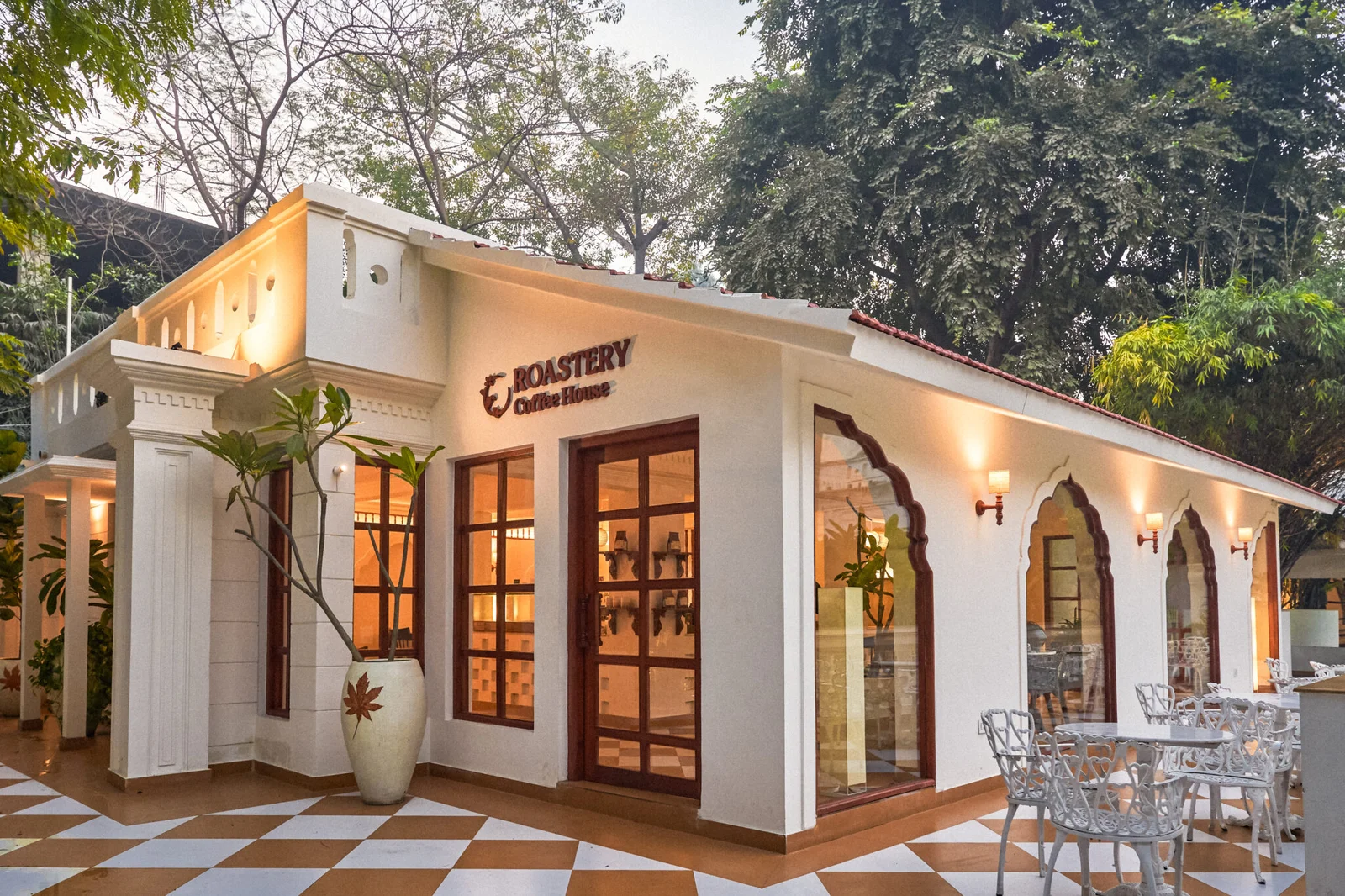
Roastery Coffee House started in 2017, when founder Nishant Sinha converted a bungalow in Banjara Hills, Hyderabad into a specialty coffee cafe. Sinha had spent a decade in coffee before that, starting as a barista and learning roasting along the way, and built Roastery around a simple idea: source green coffee directly from Indian estates, roast it in-house, and serve it fresh.
That idea grew into one of India's most recognised specialty coffee chains. Roastery Coffee today operates 15+ large-format cafes across Hyderabad, Kolkata, Jaipur, Lucknow, Delhi, Noida, and Agra, along with a flagship in Helsinki, Finland, making it the first Indian coffee brand to open in continental Europe. Beyond the cafes, the brand ships freshly roasted beans across India through its D2C store, and food accounts for nearly half of cafe revenue. In December 2025, the long-bootstrapped company raised a $10M Series A to accelerate expansion.
This operating model creates a very specific expense problem. Each cafe runs a fresh-food kitchen that needs ingredients restocked daily. Roasted beans, equipment, and supplies move constantly between the roastery, outlets, and online customers. Teams in seven cities, across multiple states and GST registrations, spend small amounts many times a day. The spending is unavoidable. The question is whether the company can see it.
Challenges
How do multi-outlet cafes traditionally manage daily expenses?
Like most F&B chains in India, the default system is petty cash. Each outlet holds a cash float, the manager pays for whatever the day demands, and finance reconciles vouchers and receipts later. When the float runs out, or when a payment has to happen on a delivery app, staff pay from their own UPI and claim it back. For a single cafe this is annoying. Across a multi-city chain, it breaks down completely.
For Roastery's teams, the spending itself was constant and unavoidable. Cafe kitchens run out of things at the worst times: milk before the morning rush, produce on a busy weekend. Teams ordered top-ups on quick commerce apps multiple times a day, paid through personal apps or ad-hoc cash, so these small orders left no consistent record, no invoice trail, and no way to compare restocking spend across outlets. Fuel for deliveries, errands, and inter-outlet runs was paid at the pump by whoever was driving, usually from their own pocket, and finance had no way to verify what was actually spent at the station.
Logistics added another layer. Roastery's coffee has to move while it is fresh: Porter bookings carry beans and supplies within cities, and shipments carry D2C orders to customers across India. Each booking was another small payment made by a different person, on a different app, reconciled weeks later, if at all. And with outlets in multiple states, month end meant finance reconstructing each outlet's spending from receipts, vouchers, and claim forms after the fact. Missing receipts meant unexplained gaps, cash purchases without proper invoices meant lost GST input credit, and reimbursement cycles meant employees waiting on their own money.
Quick commerce restocking paid through personal apps left no invoice trail across outlets
Staff covered fuel and errand payments from personal money and waited weeks for reimbursement
Porter and logistics payments sat scattered across people and apps until month end
Cash purchases without proper invoices forfeited GST input credit every month
Finance reconstructed each outlet's spending weeks after the money had already moved
Each of these problems is small on its own. Multiplied across a dozen spenders, seven cities, and hundreds of transactions a week, they compound into exactly what finance teams fear: real money moving with no real-time record.
Solutions
How Roastery Coffee runs outlet spending on CashBook
Roastery Coffee replaced floats and personal payments with CashBook's UPI for business expenses platform and its company-funded wallets. The structure is simple: the company loads a master wallet, finance distributes funds to individual team wallets with defined limits, and every team member pays vendors directly by UPI, the same way they always have, except now from company money.
A dozen operations and outlet team members now hold CashBook employee wallets, each with a balance and limits set by finance, so an outlet manager has exactly the spending power the role needs. Nobody fronts personal money, and nobody holds loose cash. The places Roastery's teams already spent, quick commerce apps for kitchen restocking, fuel stations, Porter for intra-city logistics, and customer shipments, all accept UPI, so CashBook fit in without changing a single vendor relationship. The payment method changed; the workflow didn't.
Every wallet payment lands in the ledger instantly, with the payee, amount, time, and category, and receipts attach to the transaction itself, so there is nothing to remember, write down, or reconstruct at month end. When an outlet needs more spending capacity, a busy festival weekend or a new cafe launch, finance tops up a wallet in seconds from the dashboard instead of running a cash advance and refill cycle. And the same dashboard gives finance company-wide employee expense tracking in real time, making spending patterns across cities comparable for the first time.
Issued company-funded UPI wallets with set limits to a dozen operations and outlet team members
Moved quick commerce, fuel, and Porter payments to company UPI without changing any vendor
Every transaction recorded at the moment of payment with receipts attached
Instant wallet top-ups from the dashboard replaced cash refill cycles
One real-time dashboard made spending comparable across all outlets and cities
When Roastery's teams looked at where the friction actually came from, the answer was timing: money moved in real time, but records were built weeks later. CashBook closed that gap. The spending workflow stayed exactly as it was; the record now exists the moment the payment does, and CashBook became the single source of truth for operational spend across the chain.
Impact
Within months of going live, Roastery Coffee was processing thousands of wallet transactions, and the daily texture of expense management changed. Expense data used to arrive weeks after the money was spent, assembled from receipts and memory. Now the ledger is live: a quick commerce order placed at a Jaipur cafe at 8 a.m. is visible to finance in Hyderabad at 8 a.m.
Team members stopped lending the company money. Fuel, deliveries, and supply runs are paid from company wallets, which means no reimbursement claims to file, no waiting weeks for personal money to come back, and no awkward gap between what staff paid and what they could prove. Month-end closing no longer starts with a pile of paper either: every transaction already carries its details and documentation, so finance reviews and exports instead of investigating, and purchase invoices stop disappearing into cash drawers, protecting GST input credit that undocumented cash spending forfeits.
Control improved just as much as speed. Petty cash leaks through inflated bills, undocumented withdrawals, and rounding that nobody questions; with every rupee leaving through a recorded UPI transaction against a named payee, the gaps where leakage hides simply do not exist. And with spending tagged by wallet and category, finance can put restocking, fuel, and logistics costs from different cities side by side, spot the outlet that spends differently, and ask why while the month is still running.
Zero out-of-pocket spending and zero reimbursement claims for outlet teams
Month-end reconciliation became a review of complete records instead of a reconstruction
Documented digital invoices protect GST input credit that cash spending forfeited
Recorded payee-level transactions removed the gaps where petty cash leakage hides
Outlet-wise spend comparison surfaces cost differences while the month is still running
The most important outcome is structural. Finance moved from reconstructing the past to reviewing the present. Outlet teams spend with company money and zero paperwork, the finance team works from one live ledger instead of seven cities' worth of receipts, and control over daily spend no longer depends on anyone's memory, honesty, or filing habits.
Industry Application
How CashBook helps food and beverage businesses manage outlet expenses
Cafe and QSR chains.
Give every outlet manager a wallet with limits and see restocking, maintenance, and daily purchases across all locations in one ledger.
Restaurants and bars.
Replace the cash drawer raids and vendor cash payments behind most restaurant petty cash management problems with recorded UPI payments.
Cloud kitchens.
Manage ingredient top-ups, packaging purchases, and rider payouts across kitchens without a single cash float.
Bakeries and dessert chains.
Track perishable procurement and daily market purchases per outlet, with receipts attached at payment.
D2C food brands.
Pay courier and logistics partners like Porter from company wallets, the way Roastery Coffee handles its bean shipments.
Hotels and hospitality.
See how Moustache Escapes and Spacez manage property-level spending, and how Hopcharge handles field fuel payments with the same wallet structure.
Conclusion
Roastery Coffee built its name on controlling every step from estate to cup. CashBook extends that control to the money that keeps the cafes running: the quick commerce order before the morning rush, the fuel on a delivery run, the Porter booking moving fresh beans across town. Spending that used to vanish into cash floats and reimbursement claims now lives in one real-time ledger across every city the brand operates in.
Book a demo to see how the same multi-outlet expense management setup used by Roastery Coffee can work for your cafes, restaurants, or food business, or write to us at support@cashbook.in.